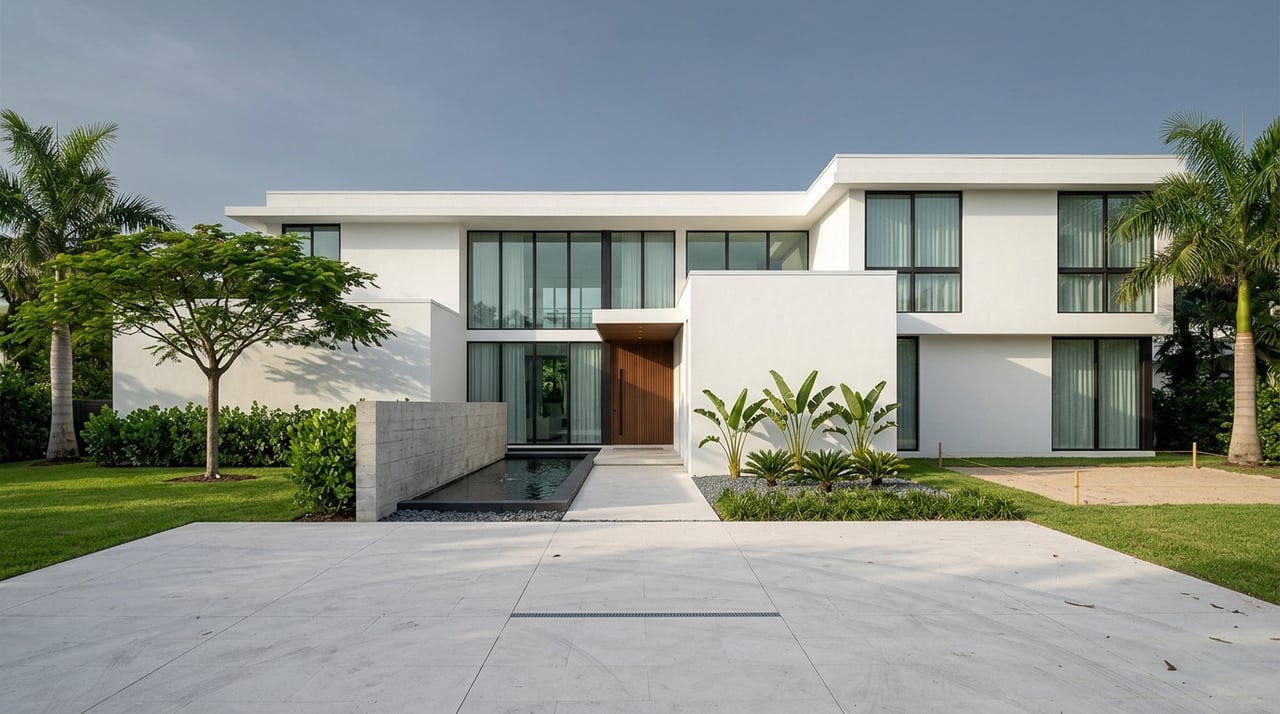
Choosing between a finished new build and a custom estate in Pinecrest is not just about style. It is about time, control, risk, and how the property’s zoning, lot shape, trees, utilities, and flood considerations affect what you can actually create. If you are weighing both paths, this guide will help you understand where each option shines, where complications often appear, and how to think about the decision with more clarity. Let’s dive in.
Why this decision matters in Pinecrest
Pinecrest is a high-demand residential market, and the village’s planning framework is designed to protect low-density single-family neighborhoods. It is also a community that is largely built out, which means luxury opportunities are shaped by scarcity as much as design.
That matters because in Pinecrest, the lot often drives the outcome more than the idea in your head. Zoning designations, setbacks, lot coverage, height limits, utilities, and tree rules all affect what can be built and how efficiently a project can move.
Pinecrest lots shape the luxury product
In many luxury markets, buyers focus first on square footage and finishes. In Pinecrest, you also need to focus on the building envelope created by the lot and the zoning district.
The village’s zoning framework includes estate and single-family districts with different density standards. These range from estate categories such as EU-1C at 2.5 gross acres and EU-1 at 1 gross acre to EU-S at 25,000 gross square feet, EU-M at 15,000 net square feet, and RU-1 at 7,500 net square feet.
Setbacks and coverage also play a major role. Pinecrest’s zoning table shows front setbacks generally ranging from 25 to 50 feet, rear setbacks from 25 to 30 feet, principal-building coverage around 20% in estate districts and up to 40% in some RU districts, and height caps in low-density districts generally around 35 feet.
For you as a buyer, that means two large lots may not offer the same design freedom. Lot dimensions, geometry, and the zoning envelope can change everything from the home’s footprint to driveway placement, pool layout, landscape design, and overall privacy.
When a finished new build makes more sense
A completed new build is usually the simpler path if your priority is speed and reduced uncertainty. The home is already near the end of the permitting and inspection process, so your focus shifts from managing construction to confirming that approvals and close-outs were handled properly.
Pinecrest states that permits establish compliance and help make a home legal and re-sellable. The village also warns that unpermitted work can lead to fees, stop-work issues, demolition requirements, insurance complications, and financing problems.
That is why a finished new build often appeals to buyers who want a more predictable timeline. If the home has already moved through the approval chain, you are generally evaluating the quality of execution and the completeness of the file rather than taking on the approval risk yourself.
Benefits of a new build purchase
- Faster path to occupancy
- Less exposure to permitting delays
- Fewer moving parts after closing
- Easier budgeting compared with an active build
- More straightforward financing than a construction timeline
For many luxury buyers, especially those managing multiple residences or international commitments, that reduction in friction is a major advantage.
When a custom estate is the better fit
A custom estate offers something a finished home cannot fully match: control. If you want a very specific architectural program, landscape concept, layout, or technical feature set, building from the ground up can align the property more closely with your vision.
In Pinecrest, however, control comes with more process. A custom estate may require a general building permit along with separate grading, demolition, mechanical, electrical, and plumbing permits. Depending on the scope, the project may also need design review or a variance.
There can also be county-level reviews tied to water and sewer, impact fees, environmental resources, fire rescue, and septic-related approvals. Even when village processing moves efficiently, outside reviews can extend the true timeline.
Benefits of a custom estate
- Greater architectural specificity
- Better alignment with your lifestyle and design priorities
- Opportunity to maximize a unique lot within zoning limits
- Ability to plan finishes, systems, and landscape from the start
If your goal is a highly personalized Pinecrest estate and you are comfortable with a longer process, the custom route may be worth the added complexity.
The real tradeoff: certainty versus control
Most buyers in this segment are not choosing between good and bad options. They are choosing between two different kinds of value.
A finished new build typically offers more certainty. A custom estate typically offers more control. In Pinecrest, where lot constraints and approvals can materially affect the outcome, that tradeoff becomes especially important.
Here is a simple way to frame it:
| Priority | New Build | Custom Estate |
|---|---|---|
| Move in sooner | Strong fit | Less likely |
| Reduce approval risk | Strong fit | More exposure |
| Personalize architecture | Limited | Strong fit |
| Manage timeline closely | Easier | More complex |
| Handle multiple review layers | Less involvement | More involvement |
Pinecrest due diligence for both paths
Whether you buy a finished new build or pursue a custom estate, due diligence matters. In Pinecrest, several local issues deserve close attention because they can affect value, timing, and future flexibility.
Verify permit history and close-outs
For a finished home, one of the first questions is whether the work was properly permitted and finalized. Because Pinecrest ties permits to legality and resale, this is not a minor paperwork issue. It can affect financing, insurance, and your ability to sell later.
Study the site plan basics
For a custom estate or teardown candidate, Pinecrest’s plan-submittal requirements are a useful early checklist. The village asks for the legal description, lot dimensions and bearings, easements, utilities, setbacks, flood zone and lowest finish-floor elevation, impervious and pervious area calculations, landscape plan, tree-removal plan, and driveway information.
That list gives you a clear preview of what the site must support. It also shows why buying the right lot is often as important as designing the right house.
Review trees early
Tree preservation is a major Pinecrest-specific issue. The village requires a tree-removal permit for the removal or relocation of any tree that is not specifically exempted, and replacement or mitigation may be required.
On large luxury lots, tree inventory can influence house placement, driveway design, construction access, and schedule. If you are considering a custom estate, tree review should happen early, not after you have fallen in love with a concept plan.
Confirm sewer and water strategy
Utilities can materially affect feasibility. Pinecrest’s comprehensive plan states that new developments must connect to sanitary sewer where available. Vacant single-family lots may use septic only when sewer is not available and the site is appropriate.
The plan also notes that new septic tanks are not permitted where a seasonally high water table or inundation risk is likely unless specially designed to mitigate those conditions. Central water is expected where available, with limited exceptions for single-family lots without access to a central potable water source.
For you, that means utility planning is not just a technical detail. It can shape budget, approvals, and the practical path to construction.
Evaluate flood conditions before committing
Flood due diligence should be part of any Pinecrest lot analysis. The village provides a GIS flood-zone viewer and elevation certificates, and it participates in FEMA’s Community Rating System, which helps support lower insurance premiums.
You should also remember that homeowner’s insurance generally does not cover flood damage, so flood insurance should be evaluated separately if the property is in or near a flood-prone area. For a custom estate, flood conditions may also affect floor elevation planning and overall site design.
Financing and carrying costs can change the answer
The emotional pull of a custom home is powerful, but financing structure often changes the practical decision. Construction loans are typically short-term, usually carry higher interest rates than standard mortgages, and are advanced in stages as work progresses.
They may also require interest-only payments before conversion or payoff. That structure creates more exposure to carrying costs during the build period than purchasing a finished residence.
Beyond financing, baseline ownership costs still apply. Property taxes, homeowner’s insurance, flood insurance where relevant, utilities, maintenance, repairs, and closing costs all need to be factored in, with closing costs often running about 2% to 5% of the home price.
For a larger Pinecrest estate, these costs can rise with more square footage, larger landscaping programs, and more extensive utility needs. If you are building, temporary carrying costs before completion can also affect the true all-in cost.
Can expedited permitting solve the timeline issue?
Pinecrest does offer expedited permit processing, but it comes with a 25% fee premium. More importantly, the village states that this does not include outside-agency reviews.
That means expedited local processing does not automatically eliminate the biggest timeline variables. County utility, environmental, or septic approvals may still define the critical path.
In other words, paying for faster village review can help, but it does not make a custom estate predictable in the same way a finished new build can be.
How to choose the right path for you
If you want speed, clarity, and a more direct route to occupancy, a finished new build is often the stronger choice in Pinecrest. It can reduce approval risk and make budgeting more straightforward.
If your priority is creating a residence tailored to your exact design and lifestyle goals, a custom estate may deliver the better long-term fit. You simply need to enter the process with a realistic understanding of zoning limits, tree rules, utility requirements, flood considerations, permitting layers, and carrying costs.
In Pinecrest, the best choice is rarely about trend or prestige. It is about matching your timeline, risk tolerance, and design goals to the realities of the lot and the village approval framework.
When you are evaluating a finished new build, a teardown candidate, or a rare estate parcel in Pinecrest, discreet guidance can save time and prevent avoidable mistakes. For a private consultation on luxury opportunities and high-value single-family estates, connect with The MGM Team Luxury Real Estate.
FAQs
What is the main difference between a new build and a custom estate in Pinecrest?
- A finished new build usually offers a faster, lower-risk path to occupancy, while a custom estate gives you more design control but involves a more complex approval and construction process.
Why does zoning matter so much for Pinecrest luxury real estate?
- Pinecrest’s estate and single-family districts have specific density rules, setbacks, lot coverage limits, and height caps, so the zoning envelope can strongly affect what you can build on a lot.
What Pinecrest permit issues should buyers review for a finished new build?
- You should confirm that the work was properly permitted, inspected, and closed out, because Pinecrest states that permits support legality, resale, financing, and insurance clarity.
What local site factors matter when planning a custom estate in Pinecrest?
- Key items include lot dimensions, easements, utilities, setbacks, flood zone, finish-floor elevation, impervious and pervious area calculations, landscape planning, tree-removal review, and driveway layout.
How do Pinecrest tree rules affect a custom home project?
- The village requires permits for most tree removals or relocations, and replacement or mitigation may be required, which can affect house placement, design flexibility, and project timing.
Do custom estate buyers in Pinecrest need to think about sewer, septic, and flood issues early?
- Yes. Sewer availability, septic limitations, water access, flood-zone conditions, and elevation planning can all affect feasibility, approvals, insurance, and total project cost.